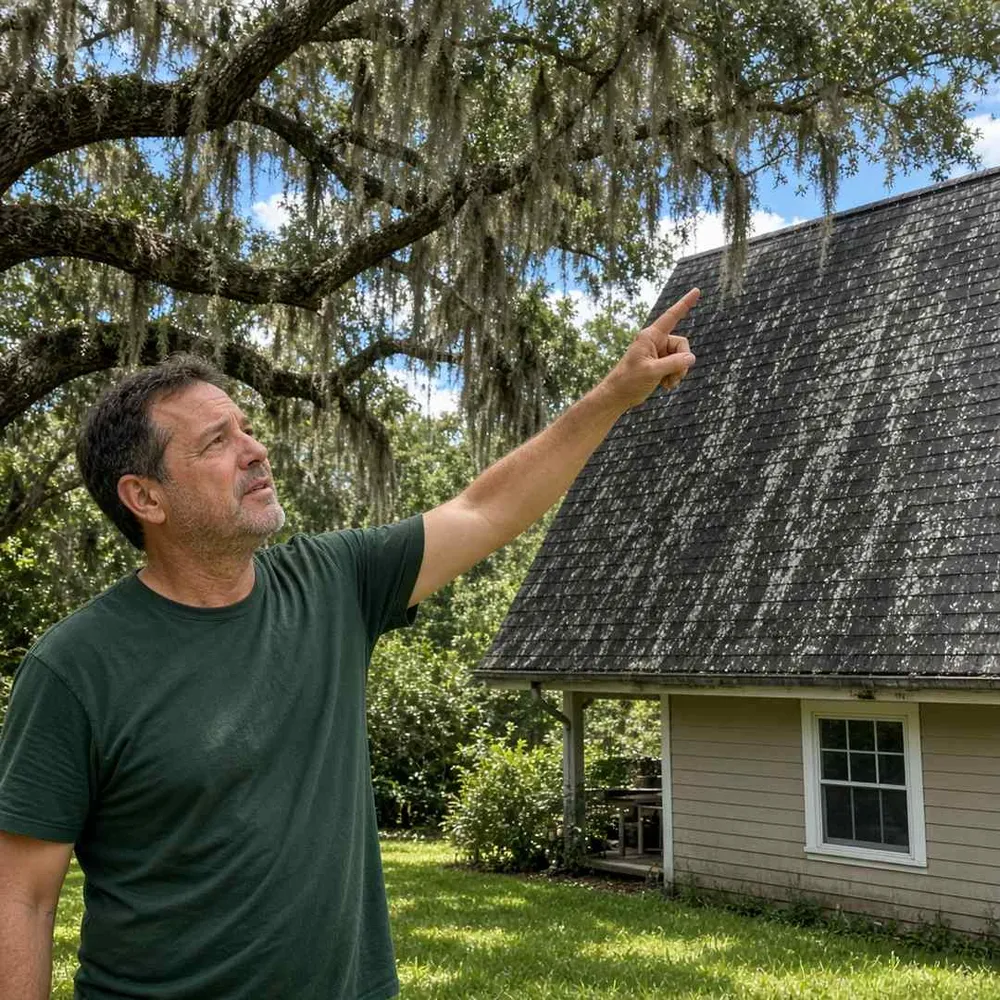
Look across almost any Hilton Head neighborhood and you'll see shingle roofs with dark streaks running down them, heaviest on the shaded side. Those streaks aren't dirt or soot, and they won't rinse off with a hose. Here's what's actually growing on your roof and why the Lowcountry is one of the worst climates for it.
The Streaks Are Algae
The black streaks are a blue-green algae called Gloeocapsa magma. It lands on a roof as airborne spores, takes hold on the shingles, and spreads as it feeds. What it feeds on is part of why modern roofs streak so badly: asphalt shingles contain limestone filler, and the algae consumes it. As the colony grows, it develops a dark protective coating against the sun, and that's the black you see streaking down the roof.
Why the Lowcountry Is Perfect for It
Gloeocapsa magma thrives in warm, humid, shaded conditions, and Hilton Head delivers all three. The island runs warm much of the year, carries high humidity, and gets close to 50 inches of rain annually. On top of that, the dense live-oak canopy over neighborhoods like Sea Pines, Wexford and Hilton Head Plantation keeps roofs shaded and slow to dry after rain. That's why the streaks almost always appear first and worst on the north-facing and tree-shaded roof planes — they stay damp the longest.
It's Not Just Cosmetic
The streaks look bad, but the real problem is underneath. The algae holds moisture against the shingles, and constant moisture accelerates the breakdown of the shingle surface and the loss of protective granules. On an island where close to half the homes predate 2000, a lot of roofs are already well into their service life, and algae shortens what's left. Left long enough, heavy growth can also lift and separate shingles.
How It's Cleared
The algae is cleared by soft-wash roof cleaning — a low-pressure cleaning solution that kills the growth at the root. The roof is never high-pressure washed, because that strips the granules and does more harm than the algae. After a soft-wash treatment, the solution kills the colony, and the black streaks fade over the following days and weeks as rain rinses the dead algae away. Because the growth is killed rather than just blasted off the surface, it stays gone much longer than a pressure rinse would manage.
What You Can Do
You can't stop spores from landing in a climate like Hilton Head's, but you can keep the roof clear with periodic soft washing and by keeping overhanging limbs trimmed back so the roof gets more sun and dries faster. If your roof is streaking black on Hilton Head, call 123-456-7890 to reach a local pro who soft washes roofs the safe way.
Work is performed by independent professionals.